
Currants & Honeyberry
Starting New Berry Plants From Bare Sticks
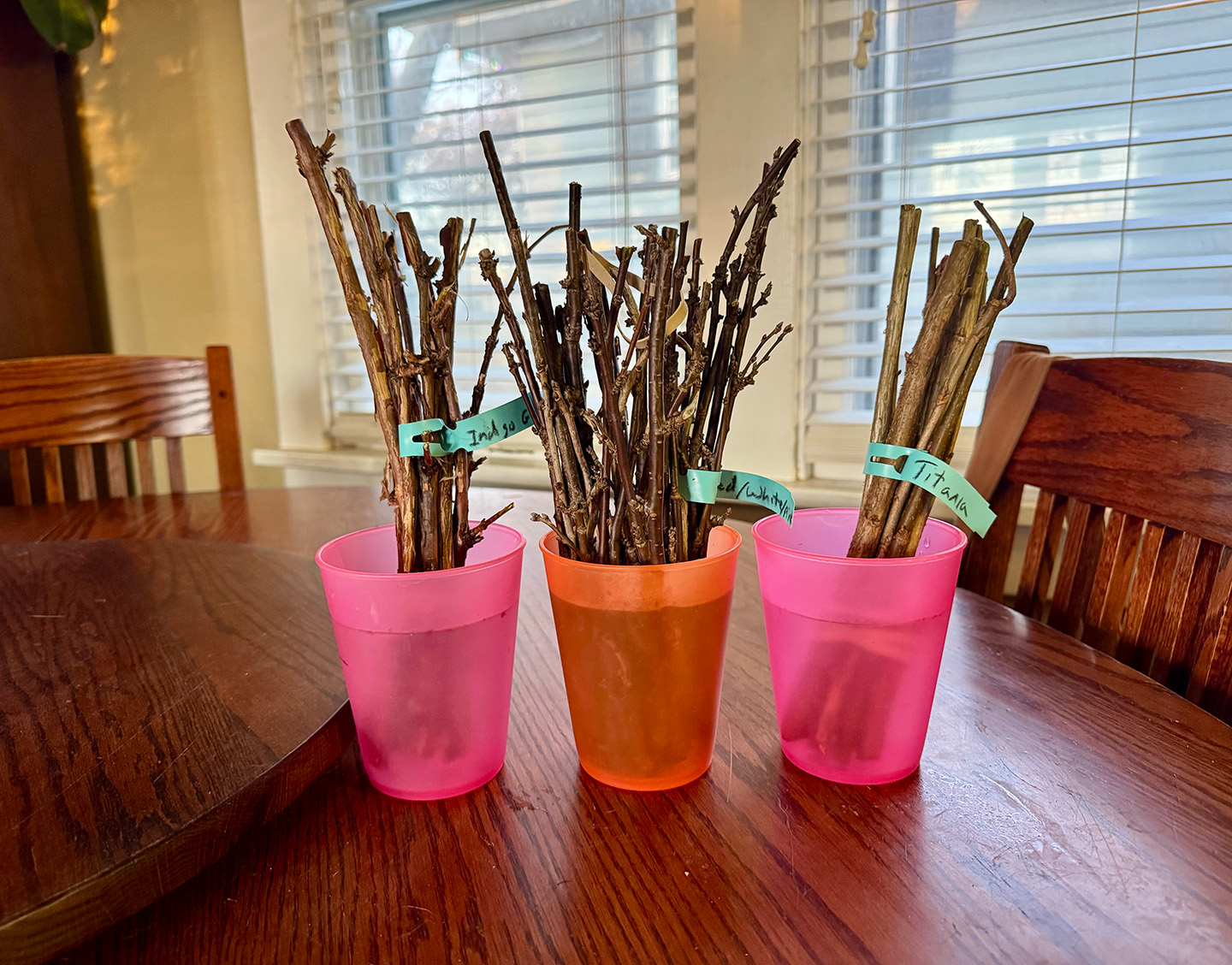
This week, a small box arrived at the Benson Community Garden that didn’t look like much at first glance. Inside were a handful of leafless, dormant sticks wrapped in damp paper and plastic. To a casual observer, they might have looked like prunings headed for the compost pile.
To us, they looked like the future.
Those “sticks” were berry cuttings from Twisted Tree Farm in Spencer, New York, a small nursery that specializes in hardy, food-producing plants for northern climates. Landowner Kurt Goetzinger purchased them for the garden. Some of these cuttings will eventually grow into shrubs at the garden. Others will find a home in Kurt and Jenny’s yard a few blocks away. All of them started the same way: as quiet pieces of wood packed with potential.
This is the story of how we’re turning those cuttings into long-lived berry bushes, and how you can try the same in your own space.
Berry Varieties We’re Adding
For this round, we focused on shrubs that thrive in our climate, offer great flavor, and bring real nutritional value to the table. The new arrivals include:
-
Titania black currants
-
Red and white currants
-
Haskap (honeyberry), variety ‘Indigo Gem’
All three are cold-hardy, tough, and productive. Once established, they can fruit for decades. They’re the kind of plants you tuck into the landscape for long-term resilience and food security, not just a one-season harvest.
What Exactly Is a Cutting?
If you’ve never worked with cuttings, the idea is both simple and slightly magical. A cutting is a piece of healthy stem taken from a mature plant while it’s dormant. That stem still carries the genetic blueprint of the parent plant. Under the right conditions, it will grow roots, then leaves, then eventually become a full-sized shrub.
Unlike starting from seed, cuttings give you a clone of the original plant. That means:
-
Predictable fruit quality and flavor
-
Known growth habit and size
-
Faster maturity compared with many seed-grown plants
You are, in a sense, borrowing a little bit of time from a mature plant and letting it start a new life somewhere else.
How We Start Berry Cuttings
When the package arrives from the nursery, the first step is to help the plants recover from their journey.
- Rehydrate after shipping – The cuttings are unwrapped and placed in a container of clean water for several hours. This helps them rehydrate after being in transit.
- Trim to size – Each cutting is trimmed to a manageable length, making sure several growth nodes (the small bumps or rings on the stem where buds and roots can form) are present.
- Encourage rooting – The lower end of each cutting is dipped in rooting hormone. (This isn’t absolutely required, but it improves the odds and speed of root formation.)
- Pot them up – Cuttings are planted deeply in small pots filled with a light, well-draining soil mix. Most of the cutting goes below the surface, with one or two buds above the soil line.
- Create a gentle environment – The pots are placed indoors under bright, indirect light. The goal is even moisture, not soggy soil. We check them regularly, watering when the surface starts to dry out.
At this stage, the plants’ job is simple: quietly grow roots. They don’t need wind, scorching sun, or heavy feeding. Just a stable environment, time, and a little patience.
From Pots to the Garden
Once the cuttings have developed roots and show signs of life above the soil, they’ll spend their first season growing in pots. That gives them time to build strength before they ever face our hot summers, cold winters, and the occasional nibbling rabbit.
When they’re dormant again, usually in late fall or very early spring, we’ll plant them in their permanent homes.
General growing conditions for these shrubs:
-
Sun: Full sun to partial sun
-
Soil: Well-drained with plenty of organic matter
-
Water: Regular moisture, especially during establishment
-
Mulch: A layer of wood chips or shredded leaves to hold moisture, keep roots cool, and suppress weeds
Pruning in the first few years is light. The goal is to let the young shrubs build a strong framework, then gradually shape them for good air flow and balanced growth.
How Big Will They Get?
These aren’t towering trees, but they’re not tiny either. They’re a perfect size for an edible landscape, small yard, or a community garden edge.
-
Black currants: Typically 3–5 feet tall and wide
-
Red and white currants: Similar in size, often 3–5 feet tall and wide
-
Haskap (Indigo Gem): Usually 4–6 feet tall and wide, forming a dense, upright shrub
They can be used as hedges, anchor plants in a mixed border, or tucked into a “food forest” layout with other fruits, herbs, and flowers.
When Will They Fruit?
This is the part where gardeners often need a gentle reminder: perennials pay you back over time, not overnight.
-
Currants
You may see a small harvest in the second year, with stronger production in year three and beyond. -
Haskap (honeyberry)
Known for its early fruiting, haskap sometimes produces light crops as early as year two as well.
Once they settle in, these shrubs are long-term providers. It’s not unusual for well-cared-for currants and haskaps to produce reliably for 20 years or more.
Flavor and Kitchen Possibilities
One of the joys of growing these berries is that they aren’t the standard grocery-store varieties. Each has a distinct personality.
-
Black currants
Deep, rich, and tangy, with an intense flavor that shines in jams, syrups, juices, and cordials. They’re also excellent dried or added to baked goods if you like bold fruit notes. -
Red and white currants
Bright, tart, and jewel-like. They’re beautiful in jellies, glazes for roasted vegetables or meats, and desserts. White currants are often a bit milder and sweeter than red. -
Haskap (Indigo Gem)
Often described as tasting like a cross between a blueberry and a raspberry, with deep purple juice and early-season ripening. They’re wonderful fresh, in smoothies, baked into muffins, or cooked down into jam.
These are berries with character. They ask to be noticed, not just tossed into a bowl as an afterthought.
Nutritional Powerhouses
Beyond flavor, all three berries bring serious nutrition to the table:
-
High in vitamin C
-
Rich in anthocyanins, the pigments responsible for their deep color
-
Used traditionally in juices, syrups, and other preparations meant to support overall wellness
Black currants, in particular, are famously nutrient dense compared with many common fruits. You feel like you’re getting something substantial with every handful.
Why We Start From Cuttings
Starting plants from cuttings takes more time up front than simply buying a potted shrub from the nursery. It requires patience, a little indoor space, and the willingness to care for something that looks like nothing much for a while.
But it also:
-
Saves money, especially if you’re growing multiple plants
-
Lets you work with varieties not commonly found in local garden centers
-
Deepens your connection to the plants—you know their full story from bare stick to full shrub
For us at Benson Community Garden and Villa Terra, it also fits our philosophy: plant with intention, think long-term, and choose species that will feed people and wildlife for years.
Looking Ahead
Over the next few seasons, we’ll be watching these cuttings transform into full, fruiting shrubs. Some will line the edges of the community garden, offering shade, food, and habitat. Some will also will grow in Kurt and Jenny’s yard, where they’ll continue to be part of our learning process. We expect a high success rate and to have extras that we plan to donate to other organizations with missions similar to Villa Terra’s, and to sell the rest at springtime farmers’ markets.
As they mature, we’ll share updates, harvest notes, and maybe even some favorite recipes. Our hope is that seeing what’s possible with a few humble cuttings will inspire more people in our neighborhood—and beyond—to tuck perennial fruits into their own spaces.
If you’re curious about starting your own berry plants from cuttings, we’d be happy to share what we’ve learned so far. After all, the best part of growing food isn’t just the harvest. It’s the way knowledge, stories, and plants themselves spread from one place to another, season after season.